Showing posts with label Punic War Series. Show all posts

Thursday, June 5

Punic Wars: Part 3 - The Fall of Carthage


History is not a novel. It is not meant to inspire, have climaxes, follow any set narrative that furthers your interest and leaves you feeling some emotion that is meant to be conveyed to the reader from the author, whatever that may be. Instead, it's a mere statement of facts; yes, they can be tremendous, shocking, exciting and so forth, but unless you're deliberately altering the past, there will be times you're left wanting. The Third Punic War is just one of those rather disappointing stories. The first war told of Carthage, a tremendous naval power, going head to head with the up and coming armies of Rome. The second is a humbled giant poised to strike again with all the might that elephants, cavalry and wave after wave of infantry has to offer, led by one of the greatest military generals you're going to hear of. So the third is the last of the series, what should be a culmination of all that has happened that turns out to be an awe inspiring bloodbath between two major forces fighting it out for the supremacy of Mediterranean Europe. Instead, we got a third part of the series that is more than a little predictable and just didn't live up to what has been a tremendously interesting wartime tale. Essentially, we got a historical version of The Matrix: Revolutions. Of course this is all just my opinion. I'll leave it up to you to decide what you think.

Cato the Elder, one of the most adamant
believers in the destruction of Carthage.
He looks like a pleasant fellow.
In between the second and third wars, a time of just a touch over half a century, Rome was caught up in conquering the East, all the while taking over the Hispanic regions that helped them in the fight against Carthage. If I haven't said this before, I'll say it now - Rome as a whole was a seriously untrustworthy jerk of a city state a heck of a lot of the time. Anyways, what's important is they were rolling through Europe and Carthage was rolling in debt. The massive indemnity owed to the Romans was just being paid off, they had lost much of their territory and their allies were not too keen on supporting a dying land. Worse yet, all of their border issues were largely controlled by the Roman senate, requiring Carthage a "good-to-go" from the Romans before engaging in any conflicts. They frequently quarrelled with Numidia, bordering them on the east, who happened to be an ally of Rome; you can image how those cases must have gone.

Carthage had little choice but to suffer through it - and they did so for the fifty years they owed the Romans the large indemnity of silver they owed from the second war. However, here's where things get a little complicated; is the treaty entirely over, or just the silver they were supposed to pay? There were two ways of seeing it: Carthage has paid their debt in full and is no longer obligated to answer to the Roman senate as they had completed the requirements of the treaty; the second way of seeing it is the land of Carthage has a lot of productive farmland to feed Rome's increasingly large population, they are no longer paying silver, and they can be "justly" attacked under the guise of saying the terms of the treaty were not just for the silver but a permanent subordination to the powers of the Romans. Yeah... Rome thought the second option seemed a little more lucrative.

In 151 BC, shortly after the debt had been paid off, Numidia launched a strike against Carthage. Suffering a defeat, they were charged with yet another fifty year debt to Numidia for not getting consent from Rome. Rome subsequently declares war, and the Carthaginians do their best to appease the Romans and basically tell them to cool off a little. Oh, and by tell them, I mean practically beg them. They offered 300 children from well-to-do Carthaginians to be sent as hostages as Rome, and essentially be raised as slaves. The 300 used in the movie 300 were likely much more intimidating than the babies, and the offer was deemed not enough.

The war heats up, and Utica, a city under Carthage's control, decides to defect to the Romans and effectively serving as a base of assault. 80,000 men gather, and demand Carthage hands over all their weapons and armour - Carthage, scared out of their wits, complies. They then politely ask to move a great distance inland, while Rome burns the city to the ground. I kid you not. That's what they asked the Carthaginians to do. It's like asking the enemy army to shoot themselves, and when they don't comply, claiming you gave diplomacy your best shot. Naturally, they had no choice but to abandon negotiations at this point and the city of Carthage was under siege, effectively beginning the third Punic war. If people were placing bets, there would be no amount of Roman gold worth the odds of betting on Carthage's success.

The preserved, rather pretty ruins of Carthage. It looks
rather nice when it isn't on fire.
To their credit, Carthage fought hard. Their cavalry caused a number of problems for the Romans and they won a few battles here and there, notably one where the Roman fleet was burned from a number of fire ships sent over to their harbours. Carthage endured, fighting tooth and nail knowing they were backed in a corner and pretty well out of options, but the crushing size and strength of the Roman force eventually proved too much. It was an underdog story where the predicted victor goes in and wins predictably.

After the final battle, there remained only 50,000 Carthaginians, a small portion of what they had been at the beginning of the third Punic war. They were promptly sold into slavery, as was the tradition after taking over a city. Carthage itself was burned, it's walls and buildings destroyed, marking the end of a once great and powerful civilization that had stood for centuries. Carthage's territories were taken, and the fertile farmland surrounding Carthage served to be a great boost to the Romans' food supply. So after having their city burned to the ground and their territories taken, their land served to fuel the beast that destroyed them.

Ain't that a kick in the teeth?


Famous Historical Battles Have the Darndest Things Happen!
  1. Utica, the city that turned over to Roman rule, eventually became the capital for the Roman territories in Africa. What a bunch of bandwagon jumpers.
  2. The Romans didn't actually salt the ground like the myth goes. They wanted to use the farmland... why the heck would they salt it? 
  3. Julius Caesar rebuilt the city about a century later when the Roman empire was thriving. I suppose if the land fuelling the Roman army was a kick in the teeth, this was dancing on the grave.  

Saturday, May 31

Punic Wars: Part 2 - The Adventures of Hannibal


We left off with Carthage in financial peril after losing miserably to the Romans, despite many of the battles taking place on their favoured place of battle, the open waters. Tail between their legs and treaty in their hands (or paws, to keep with the metaphor) Carthage establishes itself as the leader of the Iberian Peninsula. Rome allows this, as this is part of the treaty. However, Saguntum, an Iberian coastal city with Roman diplomats within it, is just about right on the border, and... well, I'm beginning to realize a lot of wartime disputes sound painfully close to schoolyard arguments. Basically, the Romans claimed that in spite of the treaty made between Rome and Carthage claiming the political independence of Saguntum, Rome said it was theirs to do as they pleased and killed all of the Carthage supporters within the city; Carthage claimed the age old "no take backsies" clause, Rome refuting their argument with a well-timed "nuh-uh".

The result was much less schoolyard-ish, resulting in the new up-and-coming leader Hannibal to led Carthage in a siege of the city and Rome saying they didn't want it badly enough to bother going in and helping. Rome is really not trying for any honourable accolades as it seems. It took quite some time but Carthage eventually took Saguntum, much to the dismay of the inhabitants, many of which took their lives rather than face the Carthaginians. I suppose Carthage wasn't earning those accolades either.

I really can't get enough of the war elephants. In the words of
Futurama... they have "elephants that never forget... to kill!"
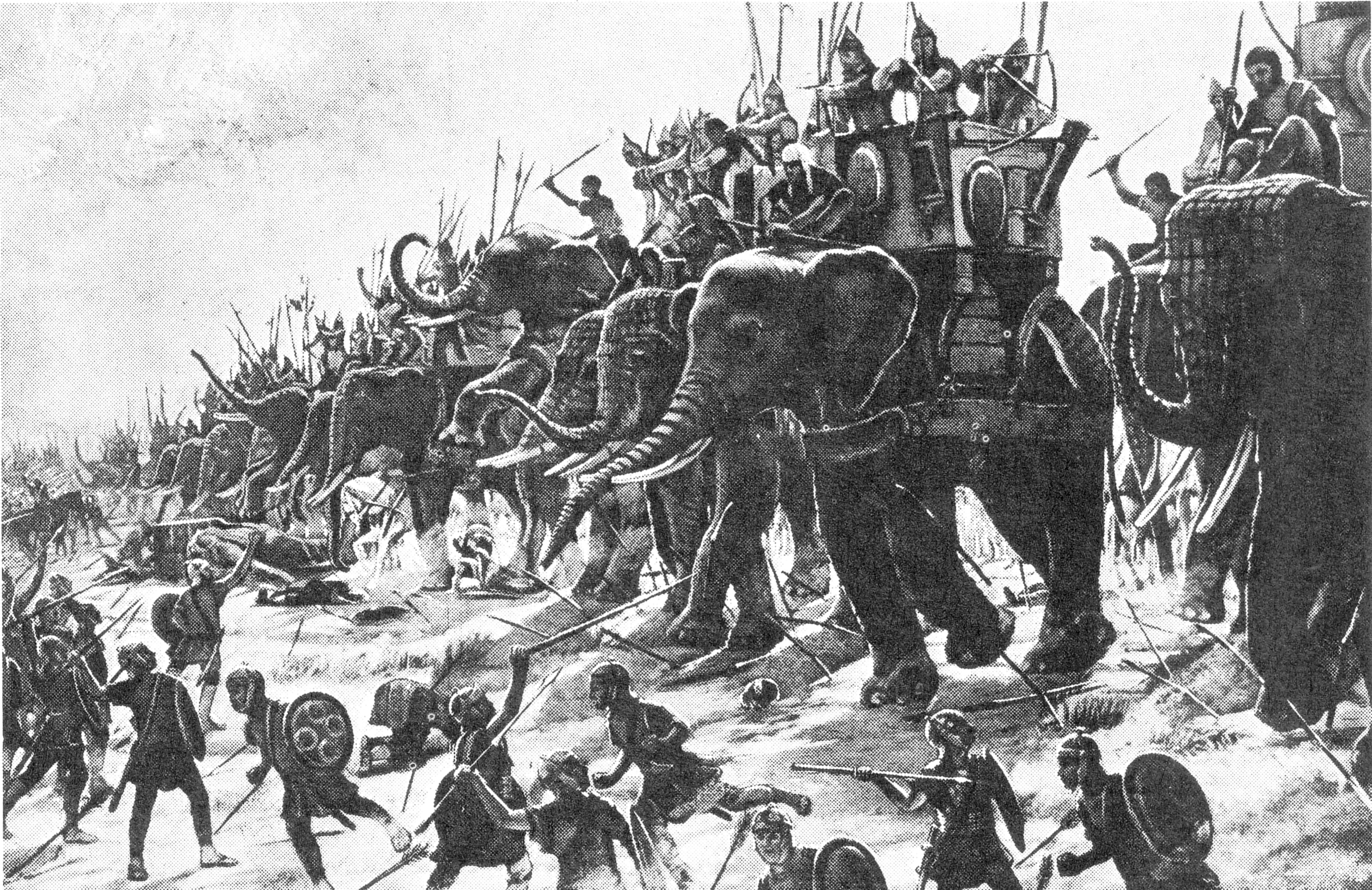
It's important to remember that Carthage was in crippling economic pain due to reparations from the treaty after losing the first Punic War, but they weren't without their forces. In Iberia alone (bear in mind they had a whole load of men in Africa as well) they had 90,000 infantry, 12,000 cavalry and 37 war elephants, an army that would rival any one in the world. This time instead of fighting Rome on the ocean they were going to fight on land, at least for the majority of the time. This initially sounds peculiar; a city-state that is almost entirely coastal, fighting another that's primarily focussed on land, and actively choosing to fight on the relatively less familiar turf. The reason for this choice was Rome was having some troubles with rebellions with some pesky Gauls who just so happened to be sympathetic to the Carthaginian cause. The tribes of Boii and Insurbres, already revolting, sent word to a northbound Hannibal at the foot of the Alps, informing him that with their guides he would be able to cross them and help support their cause, uniting them both against the Roman force.

Meanwhile, Rome was anticipating the arrival of the moving land-mass of elephants, horses and men that was bent on their annihilation and deemed it appropriate to consider doing something about it. They sent out a force to meet the Carthaginians before they left the Iberian Peninsula, knowing that if they struck them before meeting up with the uprising Gauls they had a better chance at victory. Unfortunately, the Carthaginians proved elusive and they were unable to meet them on the field of battle. How they missed 100,000+ soldiers is beyond me, but it's important to remember that this was well before the days of GPS, and I took not one but two wrong busses on the way home today. I suppose I can sympathize.

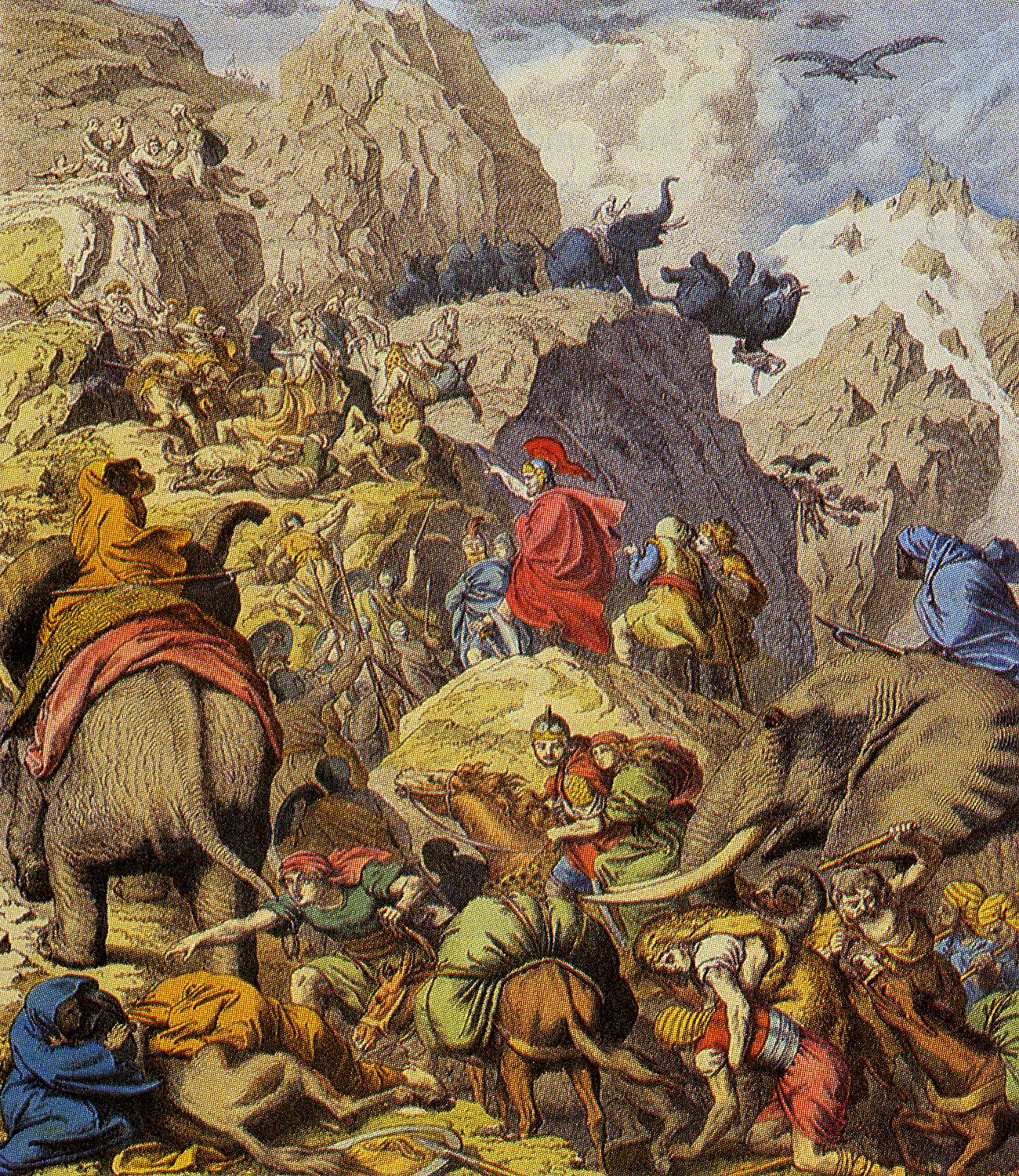
Hannibal crossing the Alps. At the top right you
can see a particularly clumsy elephant. He wasn't
going to win the war anyway.
Regardless of how it happened, they sent one of the Roman commanders back to Italy to help defend while leaving the other general, Gnaeus Cornelius Scipio Calvus (or Skippy for short, I assume) to bring the fight to Carthage. There were plenty of native tribes that were obviously harbouring some negative feelings towards the ruling Carthage, but were wary of joining the group that allied with Saguntum just prior to letting it completely burn to the ground. For whatever reason, they joined together regardless. Seeing the rising powers at his doorstep, Hanno, a brother of Hannibal who you'll learn certainly did not have the same natural mind for battle, thought it was best to fight the Romans mounting a force in Iberia before they became too large. He was so eager that he declined to wait on his reinforcements that were well on their way to support him, and challenged the Romans to a pitched battle (one which both sides agree to meet on a set field and fight it out, a la West Side Story except with less dancing and certainly less 60s fashion). Hanno was outnumbered two to one, resulting in what you would have to expect was a pretty predictable victory for the Romans. The reinforcements arrived but after a journey to meet them, and were obviously in no position to fight.

Further compounding the troubles back home for Carthage, Hasdrubal (the leader of the reinforcements that came too late) was about to find himself in another painful loss to Rome. Hoping to weaken the naval fleet of his enemy, but keenly remembering the many losses from the previous Punic war out on sea, he decided to move both his army and navy close together in a consolidated force. The purpose was to provide both moral support and a safe place to dock if need be. However, the army was hopelessly disorganized, and to put it as softly as I can, they were slaughtered. The most crippling result was a blockade between Roman soldiers and Hannibal, meaning the latter was off on his own without backup as no reinforcements could make their way to him. A few naval assaults were made over in Sicily, but bad weather and advanced knowledge on behalf of the Romans thwarted the attacks. Basically all eyes, and all Carthage hopes, were on their ruler with an admittedly giant army walking his way towards Italy.

Where everyone else in Carthage seemed like hopeless commanders, Hannibal was busy winning it almost single-handedly - along with, you know, his entire army. The Gallic tribes rose up against Rome and supported Carthage as was expected, the uprising being helped by Hannibal's army in the first place. Rome attempted to counter, but well timed ambushes slowed the Roman advance. The greatest accomplishment for Hannibal was yet to come, however; his next move involved crossing the Alps to catch the Romans by surprise, arriving much sooner than would be anticipated. Scoffing at the obvious difficulties, he brought 28,000 men, 6,000 cavalry and a number of elephants over the Alps with the help of native tribes and the Gauls. Rome has previously planning on moving on Africa, but the unprecedented speed on which they arrived set the entire plan back.

Carthage continued to fight (and win) in Roman territory, and as a result their army actually grew instead of dwindled; being unable to rely on the crappy leaders back home, he recruited more of the uprising Gauls to join him. The northern half of Italy was effectively in open revolt, seeing Hannibal as their leader. Wins kept on rolling in due to his exceptional military strategy; luring the Romans into an a trap at the battle of Trebia in which the defenders fought without breakfast and after crossing a cold river, also with the adding weight of a planned battlefield in which Carthage attacked with flanking forces as well, Rome lost 20,000 of the 40,000 that were in the fight. More and more Gauls joined, bringing the army to 60,000.

Hannibal was seemingly unstoppable, and rapidly approaching Rome. Tactically brilliant and with the force of the people on his side, the Romans prepared for the worst (the worst being losing the city of Rome - also dying). They heavily defended fortifications on the path towards Rome, but Hannibal simply moved around the flank and turned the tables on them, slipping past the enemy and effectively cutting off the Romans from their own city. Knowing that at this point they had to give chase and attack, the Romans moved right into the waiting hands of Hannibal's armies, ready and waiting in an ambush. They were slaughtered; cavalry was sent in afterwards but they as well were quickly defeated. A great number of prisoners were taken, the Roman ones being kept and the non-Romans were set free to spread "Carthage is saving you" propaganda to everyone that would listen. Rome at this point was a possible target, but ignoring his advisors Hannibal decided it would be too risky, the smarter move being to continue his plan of building up soldiers and biding his time. Hannibal was brilliant, but careful.

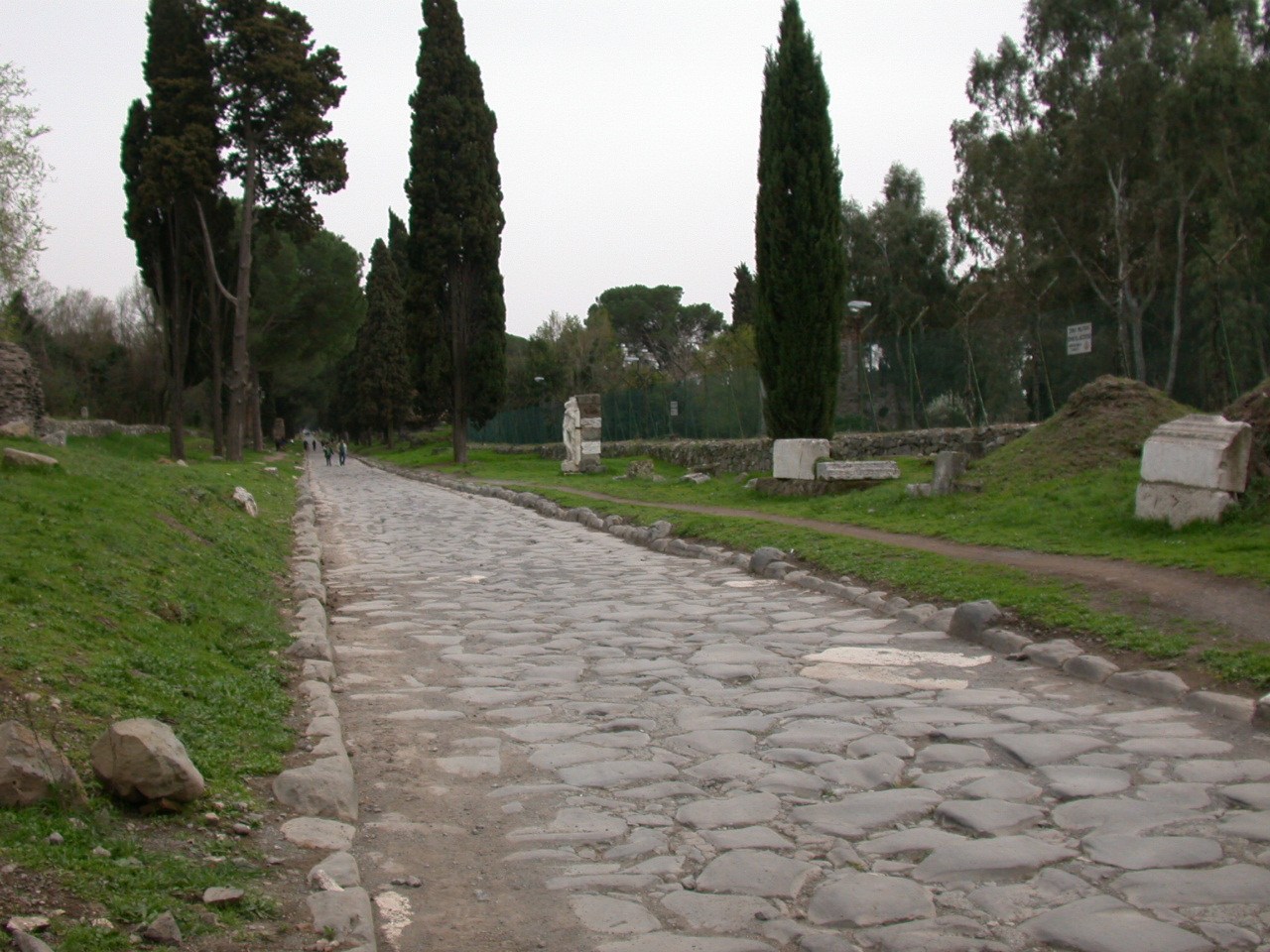
A well-preserved road that was actually used by the
armies of Fabius. I know it's just a road, but still...
when you really think about it, it's pretty amazing.
At this point Rome was freaking out about as hard as you could expect. A number of their generals were indisposed (you know, dead) and they chose to appoint somewhat of a military dictator to control the troops. The name of the man was Quintus Fabius Maximus, well known for his Fabian strategy he would employ on the armies of Hannibal. It consisted of open refusal of large scale battles, instead favouring skirmishes with small groups to weaken the greater force. Despite the fact that Rome as a whole pretty well hated it (they nicknamed him Cunctator, meaning delayer) as they thought it was a cowardly way to fight, it was effective. Hannibal was weakening due to the constant shots from the Fabian strategy. Rome was also slightly peeved at the fact that they weren't directly assaulting the army that was wandering around ravaging their homeland - admittedly a reasonable complaint. At one point a commander rose up and called Fabius a coward and moved to attack Hannibal. His traditional method resulted in Hannibal ambushing his force, and the commander didn't speak up too much against him after that.

Well, the commander didn't... but the rest of Rome certainly did. They were eager for a large scale assault, and decided to double the army supply and take the force to Hannibal's door. Eager for battle, they charged the Carthaginians on a ground that was much better suited for Hannibal who once again planned his defence flawlessly. In the battle of Cannae, 50-70,000 Romans died or were captured, a colossal loss. The shaming resulted in Greek cities in Sicily being induced to riots as well, and several southern Italian allies moving towards the way of Hannibal. Directly after the battle, there was a brief path to Rome in which Hannibal would be relatively unimpeded, but the careful, tactical manner in which Hannibal attacked proved to work against him this time. He waited too long and missed his opportunity, much the way when one has to defecate but decides to wait for the commercial and then no longer has to go. Both result in the most profound of regrets.

The caption on Wikipedia said
it was Hannibal counting the signet
rings of fallen Roman generals
(which is really cool) but it just looks
like he's standing there...
Hannibal's army, separated from his home and lacking reinforcements, eventually began to dwindle. They won some battles here and there, but Rome was retaking her cities and pestilence began to plague his numbers. It soon drew to a stalemate, and generally speaking the one closer to home is the one that is going to hold out. Meanwhile, Iberia was faring no better, and they were routed in Africa as well. The world was crumbling around Hannibal, and while he almost made peace with Scipio, breaches of conduct on either side prevented peace; Scipio was angry over the ambush tactics used by Hannibal, Hannibal angry over how Rome dealt with Saguntum. A final large scale battle between the two, in which Hannibal didn't want to lead because he was certain they would not hold their ground, resulted in Carthage reluctantly accepting their losses and taking a peace offering.

Once again, Carthage was pitted with a massive war indemnity to slap around their economy even further than before. Their navy was limited to only ten ships, just enough to ward off pirates. Hannibal, meanwhile, became a businessman for several years until he was exiled to Asia where he continued to fight the Romans until he was cornered and committed suicide. It was not a fitting end for such a tremendous military tactician. But hey, he still lost, so... he couldn't have been that good.

What made the second Punic war seemed to be when an army chose to attack: if Hanno had waited for reinforcements, the Iberian front could have ended entirely differently; Hannibal's ambushes and luring armies worked wonders throughout his campaign; the Fabian strategy of persistent waiting was critical in Rome's eventual success, with the traditional run-up-and-fight strategy failing time and time again; lastly, Hannibal dropping the ball just one time meant that he missed his opportunity to take Rome. The second war really just came down to a matter of timing.


Famous Historical Figures Say the Darndest Things!
  1. "Carthage must be destroyed." The words of Cato the Elder. It sounds like it's not that great of a quote, but it's all about context. Cato would say this at the end of every speech, believing that Carthage would rise again if not entirely crushed. Yes, every speech, even if it had absolutely nothing to do with Carthage. 
  2. "Let us relieve the Romans from the anxiety they have so long experienced, since they think it tries their patience too much to wait for an old man's death." Hannibal's last words, apparently realizing Rome was not particularly fond of him. He was not to be later reunited with Scipio on some ancient version of Maury.

Thursday, May 29

Punic Wars: Part 1 - Fighting for Sicily


The Punic Wars were three battles fought between the Roman Republic (but back before they were all-powerful and more than a little frightening, the Roman Republic was the child of the Roman Empire) and Carthage, a city-state with an particularly strong talent for naval warfare. The term "Punic" stems from a latin word related to the Phoenicians, of whom the Carthaginians claim lineage from. It has a better ring to it than "The Carthaginian Wars", but less so than "Carthaginian Crucible of Carnage and Conflict".

Carthage is the greyish blobs, Rome the red. That's
all you need to know.
At the time of the beginning of the Punic Wars, 264 B.C., Carthage controlled much of the coastal land of the Mediterranean. They were seen as the naval power of the time, and didn't have so much in the way of opposition. Rome, on the other hand, was an increasingly threatening power but at this point contained within the Italian Peninsula. The war they were about to fight would last twenty three years, and may have just been the largest wars that have occurred up until that time. Here, I'll be writing about the first of the three wars, readily admitting that I now know only of this one and very little of the following, save for the fact that (spoiler) Rome wins out.

What led up to the war was a group of Italian mercenaries mucking about in Sicily, hired by a Greek in Syracuse. They went by the name of the Mamertines, and they quickly earned a pretty negative reputation by killing a great number of people in the city of Messana, with all the looting and pillaging that is associated with sacking a city. The leader of Syracuse, Hiero II, feared the Mamertines further causing trouble and defeated them in battle - but not entirely. They were left with enough to appeal to both Rome and Carthage for some much needed help, to stem the tide of dying and whatnot. Carthage quickly took the charge, but in a "beggars can be choosers" plot twist they continued to appeal to the love of raiding and pillaging they shared with Rome in order to become allies.

The reaction in Rome was mixed; they thought it would be poor form to join forces with a marauding group of mercenaries that had ever so recently taken a city unjustly, but on the other hand, Carthage was becoming a powerful force and if they joined forces with the Mamertines they would surely take the whole island. Fearing the latter, and likely finding some sort of tenuous moral justification in order to not sound so sleazy, Rome reluctantly agreed to help the mercenaries. Unfortunately, this wasn't just picking some schoolyard chum - a rivalry was growing between Carthage and Rome, and an alliance with both simply wouldn't fly. They picked their side and they were about to live or die by it.

Agrigentum, a rather important dot
on a map.
Rome felt it was time for war, but a war that was in unfamiliar territory and circumstances. The Romans fought with great numbers of infantry, lacking prowess on the seas. The island of Sicily did not lend itself to that variety of warfare, however; hills, difficult to traverse terrain, and the obvious fact that Rome was not connected by land to the place of battle meant that they were about to be taken rather quickly out of their comfort zone. Land battles were to be limited to small battles and raids on supplies, typically centred around hitting ports and blockading pretty much whatever they could - far from the Roman way. What they did have going in their favour was the element of surprise, and by that I mean landing quickly with as many troops as they could and beating the crap out of the Carthaginians attacking the Mamertines in Messana. The crap-beating successful, they turned their eye on Syracuse, besieging that, too, and forcing them to take a critical peace deal that also had the stipulation of supplying the lower quality Roman navy with supplies. Considering both armies were away from home, an immediate source was extremely important in the battles to come.

Carthage, meanwhile, was not ill-prepared. Their rule stretched over the coastal areas of the Mediterranean, including large sections of the northern part of Africa. Seeking assistance, they hired mercenary groups from the territory, composed of fifty thousand infantry, six thousand cavalry, and - get this - sixty elephants. Can you believe that? Elephants! Perhaps they just wanted to match the Romans using trumpets to sound off the start of battle, and they thought it was cheaper.

The first major battle was in Agrigentum. A Roman assault of four legions (typically comprised of 5,400 men in each) attacked the city, but was oh so rudely interrupted by Carthaginians coming to ruin the raiding party. Surrounded and with supplies cut off, the Roman force began to fall to disease, and had to act quickly and effectively - but a Roman battle on land and in the open (open battle was actually something the Carthaginians wanted as well) resulted in a victory for Rome, taking the city. The Carthage army was damaged, but they had yet to fight on their turf - the open sea.

The expert technology used by the Romans on the sea.
1. Add nail to ladder  2. Hit other ship with nail
3. Kill people on ship  4. Repeat
The next major stage for war was the Battle of Mylae, one that Carthage thought was going to be a sure victory. Their navy outnumbered the Romans, although not by much; They had 130 ships to what is likely about 100 for Rome. Inexperienced shipbuilders, the Romans likely could have received help from Syracuse, or from taking ideas from shipwrecked Carthaginian vessels. Or, they could have learned incredibly fast. Or their ships could have completely sucked, but they went out anyways. The point is, it's not too clear. What matters is the manner in which the Romans fought: they placed a bridge-like structure that was used to board the enemy boats, allowing them to fight as if on land, a terrain much more familiar. The invention led them to a victory, forcing Carthage to retreat with a loss of both ships and likely a loss of pride after being schooled by an amateur on what they thought was kind of their thing.

Feeling confident, and in all fairness justly so, Rome ventured south to Africa to muck about in Carthaginian territory. Once again, they were successful - they won out, and began to write up terms for peace with the defeated armies. However, their terms were too heavy - perhaps they wanted too many elephants - and it forced the defenders to hire Xanthippus, a Spartan mercenary to reorganize their army. Since he's a Spartan, he obviously got the job done, likely while dropping one liners, and forced the Romans back. Needing retreat, Rome sent a great number of ships to Africa to save their men, but on the return trip a great storm (perhaps summoned by the sheer will of a single angry Spartan mercenary) killed nearly 90,000 men.

Damaged but not defeated, the Romans continued to rebuild. Carthage, however, was running short on financial abilities to fuel the war effort, whereas Rome found a way to consistently bleed investors enough to continue building ships and finding supplies. It became a slow and steady takeover, leaving the Romans as the victors but both financially in peril. A great number of casualties hit both sides, but Rome emerged as the new hot shot in the Mediterranean. To ensure their new status, they imposed a number of economic demands on Carthage, preventing them from recovering and becoming the power they once were. This also marked the first time Rome decided to expand out of the Italian Peninsula, and if we check the history books, it turns out they were really fond of this whole "expand their borders and gain power" deal. So after twenty three years of war, everything was all gravy. Carthage is safely economically shattered, Rome is the new high school bully of the seas, and they have more elephants than they know what to do with.

What could possibly go wrong?


Famous Historical Battles Give the Darndest Statistics!
  1. Once again, it's darn near impossible to find a decent quote for events that long ago, so... have some stats. Part of the peace treaty to cripple Carthage economically included 145,000 pounds of silver to be paid in ten annual instalments. I think even the cost of transporting that much would cost enough to mess things up quite a lot.
  2. Almost 300,000 men died in the battle.
  3. 150 Roman ships were lost in a single storm. Someone forgot to pray to Neptune!